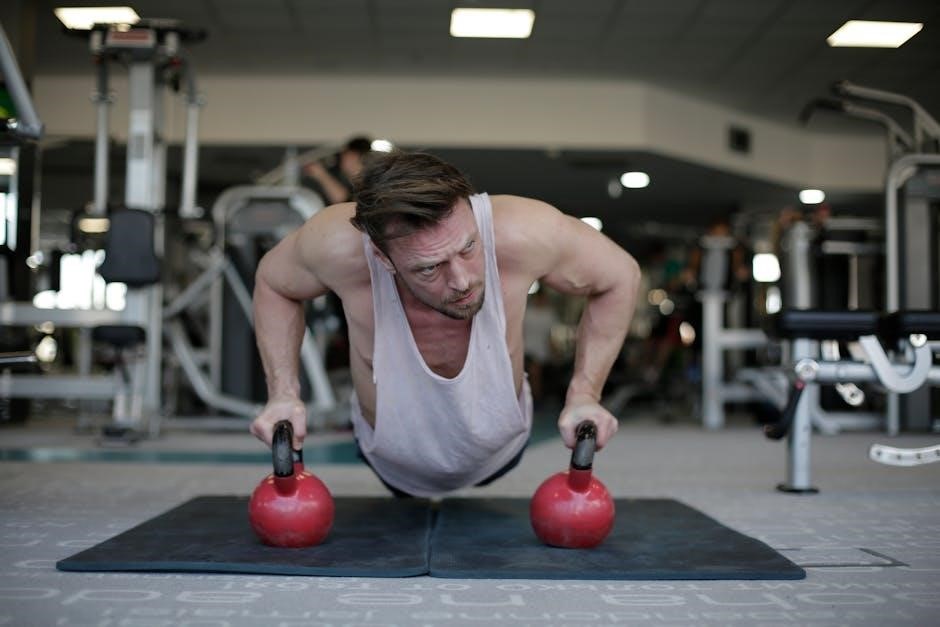
Kettlebell Workout Program PDF: A Comprehensive Guide
Discover a robust fitness journey with kettlebells! This guide details routines, from beginner to advanced, mirroring programs like those demonstrated by Amy and Rhys,
and explores alternatives like RustDesk for remote fitness coaching.
Kettlebell training represents a dynamic and efficient approach to fitness, differing significantly from traditional weightlifting. Originating from historical strength-training tools, modern kettlebells offer a unique blend of cardiovascular exercise, strength building, and flexibility enhancement. Unlike dumbbells, the kettlebell’s offset center of gravity challenges your stability and core engagement with every movement.
This comprehensive guide will navigate you through the world of kettlebell workouts, mirroring the accessibility found in routines demonstrated by fitness professionals. Whether you’re a beginner or a seasoned athlete, understanding the fundamentals is crucial. We’ll explore how kettlebells can be integrated into a personalized program, potentially even facilitated remotely using tools like RustDesk for virtual coaching.
The following sections will detail essential exercises, program design, and safety considerations, empowering you to unlock the full potential of kettlebell training. Prepare to experience a full-body workout that’s both challenging and rewarding!
Benefits of Using Kettlebells
Kettlebells offer a multitude of benefits, making them a versatile addition to any fitness regimen. Their unique design promotes functional strength, meaning the strength you build translates directly to real-life activities. Unlike isolated machine exercises, kettlebell movements engage multiple muscle groups simultaneously, maximizing efficiency.
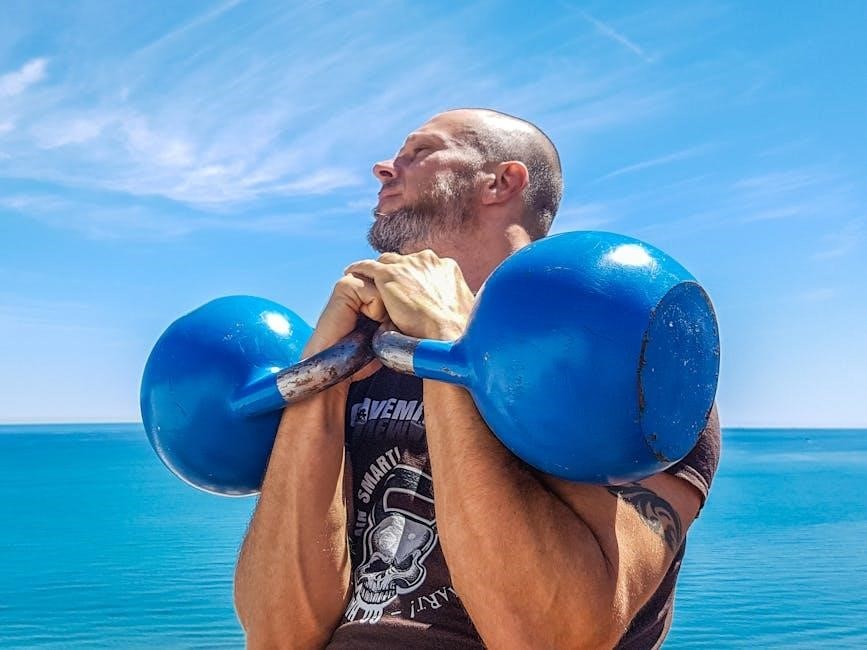
Beyond strength, kettlebell training significantly improves cardiovascular health and endurance. Dynamic exercises like swings elevate your heart rate, providing a potent cardio workout. Furthermore, the constant need for stabilization enhances core strength and improves balance. This holistic approach to fitness is demonstrated in routines accessible to all levels, as shown by fitness experts.
The portability of kettlebells allows for workouts anywhere, anytime – a convenience potentially enhanced by remote guidance tools like RustDesk. They are a cost-effective alternative to expensive gym memberships and bulky equipment, delivering substantial results with a single tool.
Essential Kettlebell Exercises
Mastering a few key exercises forms the foundation of any effective kettlebell program. Swings are paramount, building explosive power and endurance, engaging the posterior chain. Goblet Squats enhance lower body strength and improve squat form, making them ideal for beginners. These foundational movements, though basic, require proper technique for optimal results and injury prevention.
For a full-body challenge, incorporate the Turkish Get-Up, a complex movement that builds strength, stability, and coordination. These exercises, while powerful, benefit from careful practice and modification, as demonstrated in accessible routines for all fitness levels. Remember, focusing on form is crucial.
These core exercises, when combined and progressed appropriately, create a well-rounded workout. Consider utilizing resources, potentially accessed remotely through platforms like RustDesk, to refine your technique and maximize benefits.
Swings
Kettlebell swings are a dynamic, full-body exercise, central to many effective programs. The power originates from the hips, driving the kettlebell forward, not lifting with the arms. Maintaining a neutral spine and engaging the core are vital for safety and maximizing the workout’s benefits. Proper form prevents lower back strain and ensures efficient power transfer.
Beginners should start with a lighter weight, focusing on mastering the hip hinge movement. As proficiency increases, weight can be gradually added. Swings build explosive power, cardiovascular fitness, and posterior chain strength – glutes, hamstrings, and back.
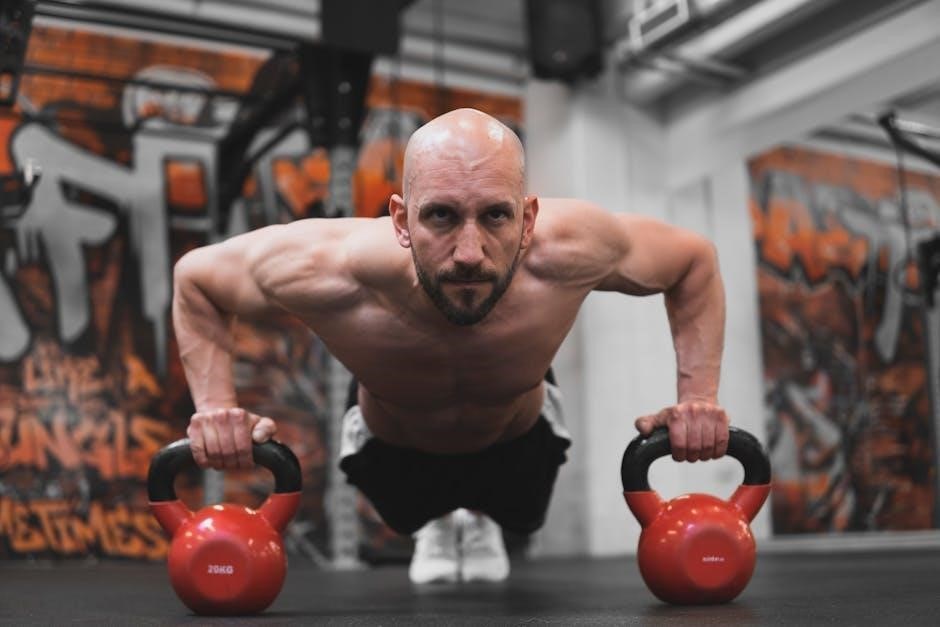
Consider utilizing online resources or even remote coaching (potentially facilitated by tools like RustDesk) to refine your technique. Remember, quality of movement trumps quantity; prioritize form over speed or heavy weight.
Goblet Squats
Goblet squats are a fantastic variation of the traditional squat, offering several advantages, particularly for beginners. Holding the kettlebell close to your chest – in the “goblet” position – encourages a more upright torso, promoting better form and engaging the core. This positioning also helps to counterbalance the weight, making the exercise more accessible.
To perform a goblet squat, stand with feet shoulder-width apart, holding the kettlebell vertically against your chest. Lower your hips as if sitting back into a chair, keeping your back straight and chest up. Ensure your knees track in line with your toes.
Goblet squats build lower body strength, improve squat depth, and enhance core stability. Like all exercises, proper form is crucial; consider utilizing remote guidance tools, such as RustDesk, to receive personalized feedback.
Turkish Get-Ups
Turkish Get-Ups (TGU) are a complex, full-body exercise demanding coordination, strength, and stability. Starting lying on your back with one arm extended holding a kettlebell, the TGU involves a series of movements to stand up, maintaining the kettlebell locked out overhead. This exercise isn’t about lifting heavy; it’s about controlled movement and mastering technique.
The sequence includes rolling to your elbow, posting up onto your hand, hip bridging, sweeping the leg through, and finally standing. Reversing the process returns you to the starting position. TGUs build shoulder stability, core strength, and overall body awareness.
Due to its complexity, mastering the TGU may benefit from remote coaching, potentially utilizing platforms like RustDesk for form checks. Start with a lighter kettlebell and prioritize controlled movements over speed or weight.
Designing Your Kettlebell Workout Program
Crafting an effective kettlebell program requires thoughtful planning. Begin by assessing your current fitness level – are you a beginner, intermediate, or advanced user? This dictates exercise selection and intensity. A well-structured program incorporates a dynamic warm-up, the core kettlebell exercises, and a cool-down.
Consider workout structure: sets, reps, and rest periods. For strength, aim for 3-5 sets of 5-8 reps with longer rest (60-90 seconds). For endurance, increase reps (10-15) and shorten rest (30-60 seconds). Varying rep schemes prevents plateaus.
Progressive overload is key – gradually increase weight, reps, or sets over time. Remember, form is paramount; prioritize technique over lifting heavy. Utilizing resources, potentially even remote guidance via tools like RustDesk, can ensure proper execution and maximize results.
Warm-up Routine
Prioritize a dynamic warm-up before each kettlebell session to prepare your muscles and joints. Begin with 5-10 minutes of light cardio, such as jogging in place or jumping jacks, to elevate your heart rate. Follow this with dynamic stretches focusing on major muscle groups used in kettlebell exercises.
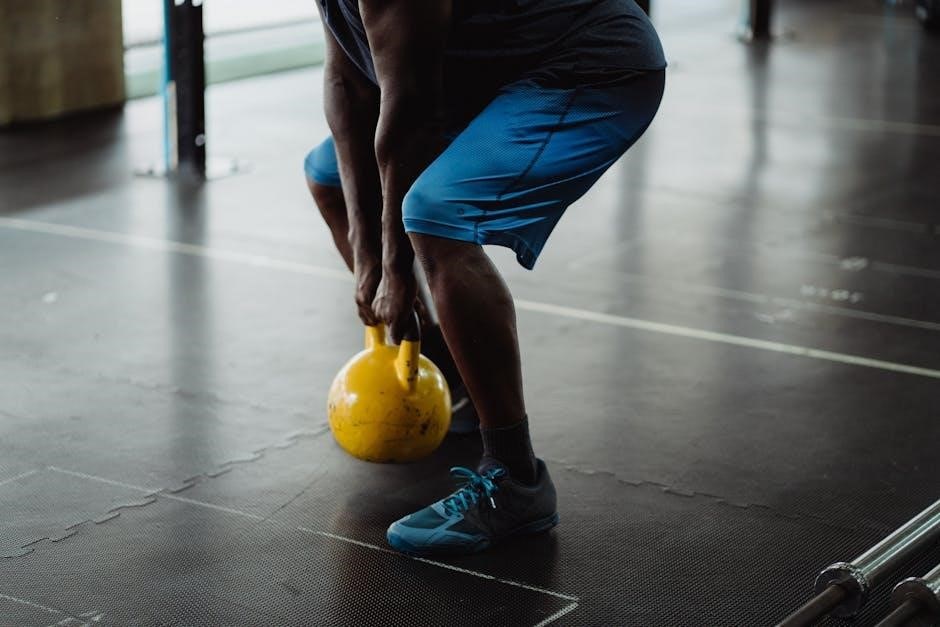
Include movements like arm circles, leg swings (forward, backward, and lateral), torso twists, and hip circles. Perform bodyweight squats and lunges to activate your lower body. Specifically, incorporate kettlebell-specific movements with a lighter weight – practice swings, halos, and windmills with minimal resistance.
This prepares your nervous system and improves range of motion. A proper warm-up, similar to routines demonstrated by fitness professionals, minimizes injury risk and enhances performance. Consider utilizing remote coaching platforms, like RustDesk, for personalized warm-up guidance.
Workout Structure (Sets, Reps, Rest)
Optimize your kettlebell workouts with a structured approach. For most exercises, aim for 3-4 sets of 8-12 repetitions. Beginners should start with fewer reps (6-8) and lighter weights, gradually increasing as strength improves. Advanced users can explore higher rep ranges (15-20) or incorporate more challenging variations.
Rest periods are crucial for recovery. Allow 60-90 seconds of rest between sets for heavier exercises like swings and Turkish get-ups. For lighter, higher-rep exercises like goblet squats, 45-60 seconds may suffice. Adjust rest based on your fitness level and the intensity of the exercise.
Consider circuit training – performing a series of exercises back-to-back with minimal rest – for a more intense workout. Remote coaching tools, such as RustDesk, can help track progress and adjust sets/reps for optimal results.
Kettlebell Workout Programs for Different Fitness Levels
Tailor your kettlebell training to your current fitness level for safe and effective results. Beginner programs focus on mastering fundamental movements like swings and goblet squats with lighter weights, emphasizing proper form. Expect 2-3 workouts per week, prioritizing technique over intensity.
Intermediate routines introduce more complex exercises, such as Turkish get-ups, and increase the weight or reps. Incorporate circuit training and explore variations of basic movements. Aim for 3-4 workouts weekly, balancing strength and endurance.
Advanced programs challenge experienced users with heavier weights, complex combinations, and advanced techniques. Consider unilateral exercises and plyometrics. These routines require 4+ workouts per week and a solid foundation of kettlebell proficiency. Remote coaching via platforms like RustDesk can provide personalized guidance.
Beginner Kettlebell Workout
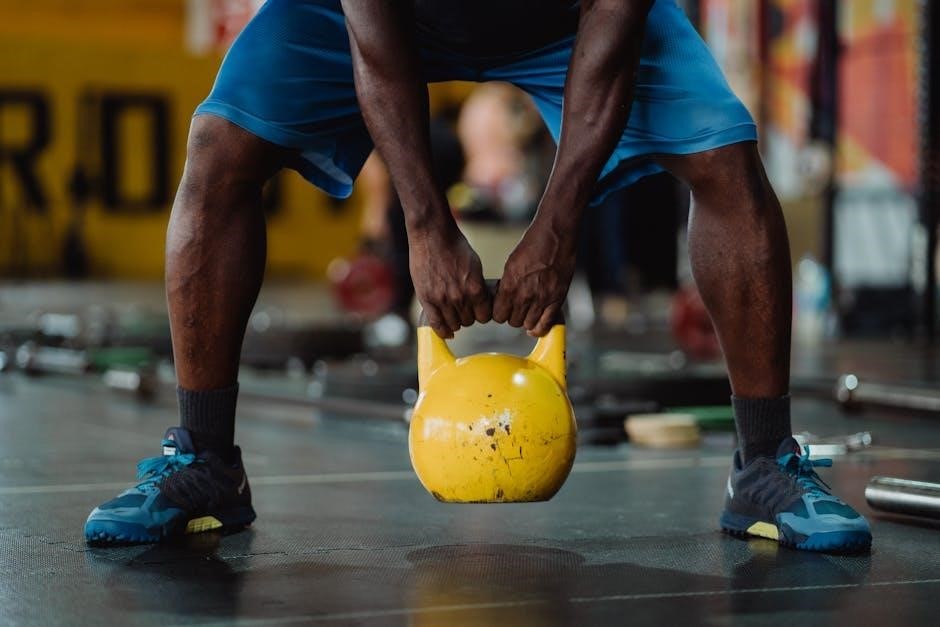
Start your kettlebell journey with this foundational workout, prioritizing form and control. Warm-up with 5 minutes of light cardio and dynamic stretching. Perform 3 sets of 10 repetitions for each exercise, resting 60-90 seconds between sets.
Exercises: Kettlebell Swings (focus on hip hinge), Goblet Squats (hold the kettlebell close to your chest), Kettlebell Deadlifts (maintain a straight back), and Kettlebell Rows (pull with your back muscles). Use a lighter kettlebell weight – start with 8-12kg (women) or 12-16kg (men).
Cool-down with static stretching, holding each stretch for 30 seconds. Remember, consistency is key! Aim for 2-3 workouts per week, allowing for adequate recovery. Consider utilizing resources and potentially remote guidance, similar to programs demonstrated by Amy and Rhys, for form checks.
Intermediate Kettlebell Workout
Elevate your fitness with this challenging intermediate routine, building upon the beginner foundation. Warm-up with 5-10 minutes of dynamic stretching and light kettlebell movements. Perform 3-4 sets of 12-15 repetitions for each exercise, resting 45-60 seconds between sets.
Exercises: Kettlebell Swings (increase speed and power), Single-Arm Kettlebell Press, Kettlebell Lunges (alternating legs), Russian Twists with Kettlebell, and Kettlebell Figure-Eights (focus on control). Increase the kettlebell weight to 16-20kg (women) or 20-24kg (men).
Incorporate more complex movements and focus on maintaining proper form throughout. Consider utilizing remote coaching options, like those available through platforms similar to RustDesk, for personalized feedback. Cool-down with static stretching, holding each stretch for 30-45 seconds. Aim for 3-4 workouts per week.
Advanced Kettlebell Workout
Push your limits with this demanding advanced routine, requiring significant strength and endurance. Begin with a thorough 10-15 minute dynamic warm-up, including complex kettlebell flows. Perform 4-5 sets of 10-12 repetitions for each exercise, with 60-90 seconds rest between sets.
Exercises: Double Kettlebell Front Squats, Kettlebell Clean and Jerk, Single-Leg Deadlifts with Kettlebell, Kettlebell Snatch, and Kettlebell Complexes (combining multiple exercises seamlessly). Utilize heavier kettlebell weights – 24kg+ (women) or 28kg+ (men).
Focus on explosive power, impeccable form, and controlled movements. Consider utilizing remote fitness platforms, akin to RustDesk, for expert guidance and form correction. Cool-down with extensive static stretching and foam rolling. This routine is best performed 3-4 times weekly, allowing for adequate recovery;
Safety Considerations & Proper Form
Prioritize safety above all else when embarking on a kettlebell journey. Begin with mastering fundamental movements before progressing to complex exercises. Always maintain a neutral spine, engage your core, and control the kettlebell’s momentum. Improper form can lead to injuries, so consider remote coaching via platforms like RustDesk for expert feedback.
Choosing the correct weight is crucial; start lighter than you think you need to. Common mistakes include rounding the back during swings, using momentum instead of strength, and failing to fully extend the hips. Ensure adequate space around you, free from obstacles.
Listen to your body and stop if you experience pain. Warm-up thoroughly before each workout and cool down afterward. Proper form isn’t just about avoiding injury; it maximizes effectiveness.
Choosing the Right Kettlebell Weight
Selecting the appropriate kettlebell weight is paramount for both safety and effectiveness. Beginners, particularly those new to strength training, should start conservatively – often 8-12kg for women and 12-16kg for men. Prioritize mastering proper form with a lighter weight before increasing the load.
Consider your current fitness level. If you can comfortably perform 10-12 repetitions of a swing or goblet squat with good form, it’s time to consider a slightly heavier kettlebell. Don’t be afraid to experiment; having a range of weights allows for progressive overload.
Remember, it’s better to err on the side of caution. Using a weight that’s too heavy compromises form and increases the risk of injury. Platforms like RustDesk could facilitate remote form checks with a coach to guide your weight selection.
Common Mistakes to Avoid
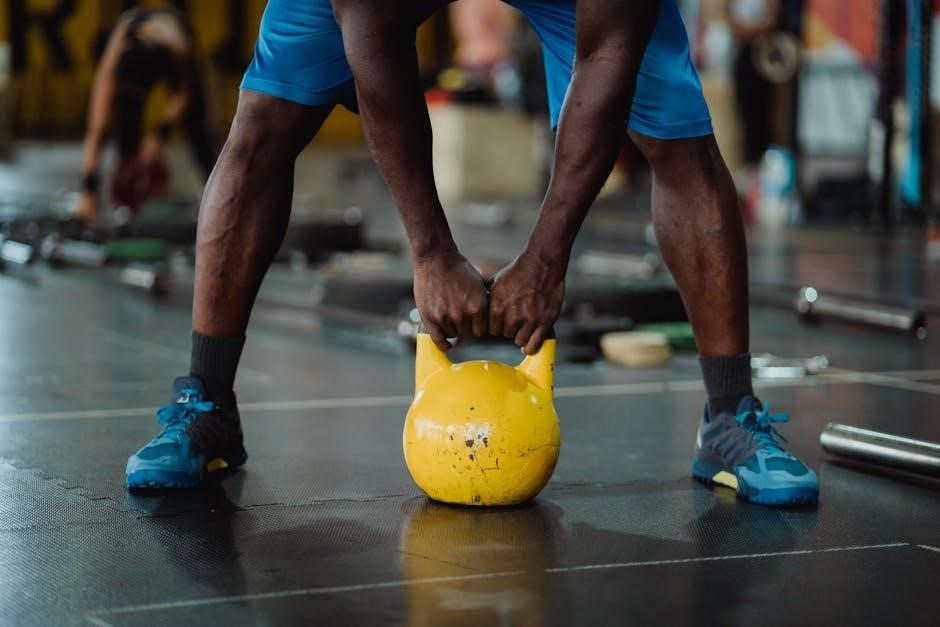
Many individuals new to kettlebell training make preventable errors. Rounding the back during swings is a frequent issue, compromising spinal health. Maintain a neutral spine and engage your core throughout each movement. Another common mistake is using momentum instead of controlled muscle engagement – focus on power from your hips and glutes.
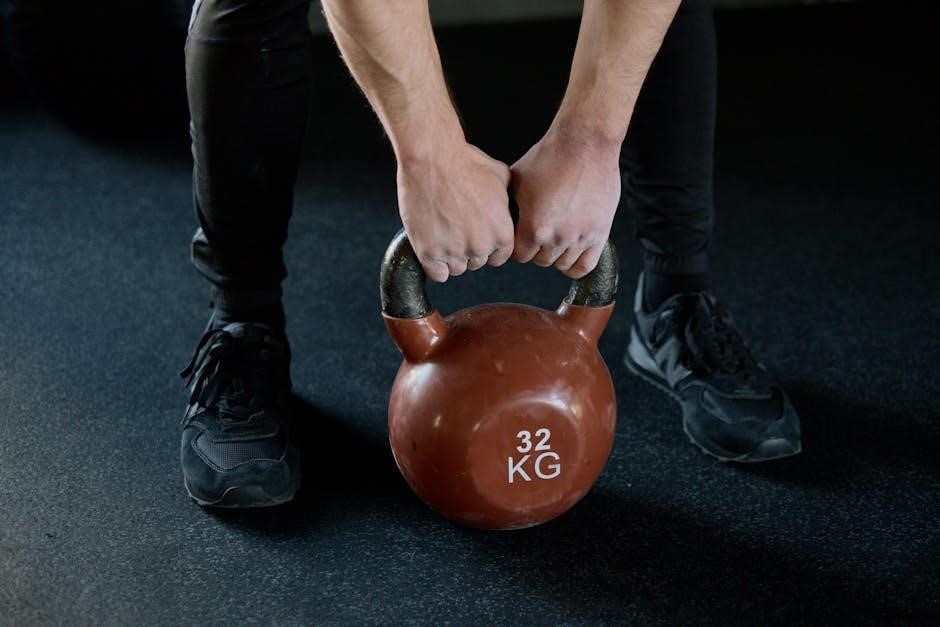
Avoid “arming” the swing, where the movement originates from the arms rather than the posterior chain. Keep your arms relaxed and let the kettlebell arc naturally. Furthermore, improper grip can lead to discomfort or injury; ensure a secure, but not overly tight, hold.
Consider utilizing remote coaching tools, similar to RustDesk, for personalized form feedback. Consistent self-assessment and mindful practice are key to avoiding these pitfalls and maximizing the benefits of your kettlebell workout program.

Kettlebell Workout Program PDF Resources & Downloads
Enhance your training with readily available resources! Numerous online platforms offer downloadable kettlebell workout PDFs, catering to all fitness levels – mirroring routines demonstrated by experts like Amy and Rhys. These PDFs often include detailed exercise instructions, program schedules, and progression guidelines.
Explore fitness websites and communities for free downloadable programs. Alternatively, consider purchasing professionally designed programs for a more structured approach. Remember to prioritize resources that emphasize proper form and safety, potentially utilizing remote viewing tools like RustDesk to share form with a coach.
Look for PDFs that offer modifications for different abilities and equipment availability. Always review the credentials of the program creator and ensure the content aligns with your fitness goals. Download and save these resources for convenient access during your workouts!