
High-Leverage Teaching Practices


High‑leverage practices empower students to showcase mathematical knowledge through guided whole‑group discourse, partner discussions, collaborative routines, share‑compare‑connect segments, and rich task engagement, fostering confident, capable mathematicians. These strategies deepen reasoning collaboration!
Guided Whole-Group Discourse
Guided whole‑group discourse is a foundational high‑impact instructional strategy that invites every student to articulate reasoning, challenge assumptions, and co‑construct understanding. In practice, the teacher opens with a focused, concept‑centered question aligned with the lesson’s learning goal. Students respond sequentially, ensuring equitable participation, while the teacher records key ideas on a shared visual aid—such as a digital whiteboard or a physical diagram—to capture the evolving conversation. Probing follow‑up questions—“What evidence supports this claim?” and “How does this connect to the goal?”—encourage depth and relevance. The teacher actively listens, models metacognition by verbalizing their own reasoning steps, and provides immediate, targeted feedback that helps students refine their arguments; This dynamic cycle of questioning, listening, and feedback creates a safe, collaborative space where misconceptions are surfaced and corrected in real time. Research indicates that guided whole‑group discourse boosts conceptual understanding, promotes a positive mathematical identity, and increases student confidence. By embedding this practice in every lesson, educators scaffold deep learning, foster higher‑order thinking, and cultivate a classroom culture where mathematical dialogue is valued and celebrated.
Partner Discussions
Partner discussions are a cornerstone of high‑impact mathematics instruction, enabling students to articulate, defend, and refine ideas in a collaborative setting. The teacher initiates the activity by posing a concept‑focused problem aligned with the lesson’s learning goal. Students pair up, often rotating partners to expose them to diverse perspectives. Each pair receives a brief scaffold—such as a graphic organizer or a set of guiding questions—to structure their dialogue. One student presents an initial solution while the other listens, then they alternate roles, ensuring equitable participation. Throughout the exchange, the teacher circulates, listening for misconceptions, prompting deeper inquiry with probing questions like “Why does this step follow?” or “Can you find an alternative approach?” The pair’s discussion is recorded on a shared visual, allowing the whole class to see the progression of ideas. After the partner segment, the teacher facilitates a brief whole‑group reflection, asking pairs to share insights and connect them to the broader learning goal. This cycle of partner dialogue, teacher probing, and class synthesis reinforces conceptual understanding, develops mathematical identity, and promotes a culture of respectful, evidence‑based reasoning. Research consistently shows that partner discussions increase engagement, improve problem‑solving skills, and foster a sense of belonging in the mathematics classroom. By integrating partner discussions into daily routines, teachers create an environment where students articulate reasoning, critique peers’ logic, and refine solutions, embedding fluency routine practice.

Collaborative Instructional Routines
Collaborative instructional routines embed teamwork, shared reasoning, and collective problem‑solving into everyday math lessons. In a typical routine, the teacher presents a problem with the learning goal and students work in small groups, each member contributing a distinct role—such as recorder, spokesperson, or checker. The group uses a shared visual aid, like a concept map or a shared digital workspace, to document their reasoning. The teacher circulates, listening for misconceptions and prompting deeper inquiry with probing questions that target the learning goal. After the group work, the class reconvenes for a whole‑group discussion where each group presents its solution, allowing peers to critique and build on each other’s ideas. This cycle of group work, teacher probing, and whole‑group synthesis reinforces conceptual understanding, promotes mathematical identity, and encourages a culture of respectful, evidence‑based dialogue. Research shows that routines such as “Think‑Pair‑Share,” “Problem‑Based Learning,” and “Math Circles” increase engagement, improve problem‑solving skills, and foster a sense of belonging. By embedding collaborative routines into daily practice, teachers create a learning environment where students negotiate meaning, articulate reasoning, and refine solutions, thereby embedding fluency and depth in the curriculum. Consistent use of these routines turns everyday math into a collaborative exploration, where students build confidence, deepen understanding, and feel truly valued as mathematicians.!
Share-Compare-Connect Segments
Share‑Compare‑Connect (S‑C‑C) segments are structured moments in which students articulate individual solutions, examine peers’ approaches, and synthesize common reasoning into a unified classroom understanding. The routine begins with a brief “share” phase where each student or small group presents a solution to the posed problem, using a chosen representation—such as a diagram, number line, or algebraic expression—to justify their reasoning. During the “compare” phase, the teacher prompts students to identify similarities and differences between the presented approaches, encouraging them to articulate the underlying mathematical principles that link diverse methods. This comparison is guided by probing questions that target the learning goal, such as “What common strategy did you notice?” or “How does this representation help us see the pattern?” Finally, the “connect” phase invites the class to weave the shared insights into a cohesive explanation, often recorded on a shared visual aid like a concept map or a shared digital whiteboard. By repeatedly cycling through share, compare, and connect, students develop metacognitive awareness, refine their mathematical language, and internalize the big idea that multiple valid solutions can coexist within the same conceptual framework. Research indicates that S‑C‑C segments enhance student confidence, promote collaborative reasoning, and reinforce the alignment between learning goals and instructional practice, making them a cornerstone of high‑impact math instruction. Students who engage in these segments develop a habit of reflecting on their own reasoning, comparing it with peers, and connecting insights to broader mathematical concepts, thereby strengthening their identity as capable mathematicians and ensuring that learning goals are consistently met through collaborative inquiry. This process not only deepens conceptual understanding but also builds confidence, encourages persistence, and fosters a classroom culture where every voice is valued and every solution is respected.
Rich Task Engagement
Rich task engagement immerses learners in authentic, open-ended problems that require multiple representations, collaboration, and iterative refinement, fostering deep conceptual understanding now! ! Lorem ipsum dolor sit amet, consectetur adipiscing elit. Lorem ipsum dolor sit amet, consectetur adipiscing elit. Lorem ipsum dolor sit amet, consectetur adipiscing elit. Lorem ipsum dolor sit amet, consectetur adipiscing elit. Lorem ipsum dolor sit amet, consectetur adipiscing elit. Lorem ipsum dolor sit amet, consectetur adipiscing elit. Lorem ipsum dolor sit amet, consectetur adipiscing elit. Lorem ipsum dolor sit amet, consectetur adipiscing elit. Lorem ipsum dolor sit amet, consectetur adipiscing elit. Lorem ipsum dolor sit amet, consectetur adipiscing elit. Lorem ipsum dolor sit amet, consectetur adipiscing elit. Lorem ipsum dolor sit amet, consectetur adipiscing elit. Lorem ipsum dolor sit amet, consectetur adipiscing elit. Lorem ipsum dolor sit amet, consectetur adipiscing elit. Lorem ipsum dolor sit amet, consectetur adipiscing elit. Lorem ipsum dolor sit amet, consectetur adipiscing elit. Lorem ipsum dolor sit amet, consectetur adipiscing elit. Lorem ipsum dolor sit amet, consectetur adipiscing elit. Lorem ipsum dolor sit amet, consectetur adipiscing elit. Lorem ipsum dolor sit amet, consectetur adipiscing elit. Lorem ipsum dolor sit amet, consectetur adipiscing elit. Lorem ipsum dolor sit amet, consectetur adipiscing elit. Lorem ipsum dolor sit amet, consectetur adipiscing elit. Rich task engagementRich task engagement

High-Impact Instructional Practices Framework
High‑impact practices align goals, use representations, probe with questions, give frequent feedback, monitor progress, adjust instruction, emphasize big ideas, and nurture student mathematical identity, ensuring deep, sustained learning. for all learners!!

Learning Goals Alignment
Learning‑goal alignment is the cornerstone of high‑impact mathematics instruction. In practice, teachers begin each unit by articulating clear, measurable objectives that reflect state standards and the curriculum’s big ideas. These goals are then woven into every lesson plan, assessment, and classroom discussion, ensuring that instruction is purposefully directed toward the intended outcomes. By foregrounding the learning goals, educators create a transparent learning pathway that students can trace, which promotes metacognitive awareness and self‑regulation. Teachers regularly revisit the goals during class, using brief, targeted questions to check for understanding and to connect students’ current reasoning back to the overarching objectives. This continual reference to the learning goals keeps the classroom focused and helps students see the relevance of each activity. Moreover, alignment facilitates the design of formative assessments that are directly tied to the goals, allowing for timely feedback that is specific, actionable, and aligned with the desired knowledge, skills, and dispositions. When feedback is explicitly linked to the learning goals, students can adjust their strategies and deepen their conceptual understanding. Finally, learning‑goal alignment supports differentiation, as teachers can scaffold or extend tasks while still maintaining fidelity to the core objectives. In sum, aligning learning goals with instruction, assessment, and feedback creates a coherent, high‑impact framework that drives student achievement and mathematical confidence. By consistently linking each lesson back to these goals, teachers cultivate a classroom culture where inquiry, reflection, and evidence‑based reasoning become routine, empowering students to own their mathematical growth. Together they thrive!
Use of Mathematical Representations
Mathematical representations are the lenses through which students view abstract concepts. High‑impact instruction deliberately introduces a spectrum of physical and digital tools—cubes, place‑value disks, number bonds, number lines, tape diagrams, and interactive software—to make patterns visible. Teachers model how each representation captures a different facet of the same idea, then invite students to switch between them, fostering deep conceptual links. For instance, when exploring fractions, a teacher may start with fraction bars, move to number lines, and finish with digital manipulatives that animate addition and subtraction. This progression shows students that representations are not static; they evolve as understanding deepens. By consistently pairing a concrete artifact with an abstract symbol, learners internalize the relationship between the two, strengthening both procedural fluency and conceptual insight. Assessment is built around representation choice: students explain why a particular diagram best illustrates a problem, or they translate a word problem into a number line sketch. Such tasks require metacognition and evidence of understanding. Moreover, representation use is scaffolded: early lessons rely on tactile, hands‑on models; later stages shift to digital simulations that allow manipulation and feedback. This scaffolding ensures that all students, regardless of prior experience, can access the content. Students also practice translating between representations, reinforcing their ability to see equivalence. The result is a classroom culture where students freely choose the representation that best fits their thinking, and teachers continuously prompt them to justify those choices, thereby reinforcing the core mathematical ideas and promoting a robust, transferable skill set.

Professional development sustains effective representation practices. Teachers attend workshops where they design lessons that integrate multiple representations, then reflect on student responses. Peer observations focus on how instructors transition between models and how they prompt students to articulate the underlying mathematics. Over time, this collaborative cycle builds a shared repertoire of strategies that can be adapted across grade levels. Importantly, data from formative assessments guide decisions about which representations to emphasize, ensuring instruction remains responsive to student needs. When students consistently see that a single concept can be expressed in many ways, they develop flexibility and resilience, key traits of confident mathematicians. Consequently, the deliberate, thoughtful use of representations becomes a hallmark of high‑impact instruction, driving deeper understanding and lasting mathematical growth.
Probing Questions
Probing questions are the engine that drives student thinking beyond surface recall. In high‑impact math instruction, teachers craft open‑ended prompts that require justification, evidence, and reflection. A well‑designed question invites students to articulate the reasoning behind a solution, to connect new ideas to prior knowledge, and to evaluate the validity of their own and peers’ arguments. For example, after solving a system of equations, a teacher might ask, “What would happen if we swapped the coefficients? Why does that change the solution set?” Such questions force students to explore underlying principles rather than simply applying a memorized algorithm.
Effective probing follows a predictable pattern: it begins with a clear, focused prompt, then invites students to explain, justify, or extend. Teachers use the “I want to know” framework, asking, “What do you think is happening here?” or “Why does this step work?” This encourages metacognition and makes the learning process visible. The teacher’s role is to listen, listen, and listen again—capturing the diverse reasoning pathways students take. By recording these pathways, the instructor can identify misconceptions, highlight patterns, and tailor subsequent instruction.
Probing questions also serve as a bridge to assessment. When students articulate their thought processes, teachers gain real‑time insight into conceptual understanding. This data informs immediate feedback and long‑term instructional adjustments. Moreover, repeated exposure to probing nurtures a classroom culture where questioning is valued, and students feel empowered to challenge assumptions and propose alternative solutions.
Research shows that the frequency and quality of probing directly correlate with student achievement gains. In practice, teachers embed probing in every lesson, using a mix of whole‑class, small‑group, and individual prompts. They cycle through stages of “What do you think?” “Why?” “How can we prove it?” and “What if we change this?” This scaffolded approach ensures that students move from descriptive to explanatory to analytical thinking, solidifying mathematical fluency and deep understanding.
Frequent Feedback Mechanisms
Frequent feedback is a cornerstone of high‑impact math instruction. It occurs at multiple points: during formative checks, peer review, self‑assessment, and teacher‑student dialogues. The goal is to provide timely, actionable information that students can use to refine their reasoning and correct misconceptions before they become entrenched. Research indicates that feedback delivered within 24 hours of a learning activity yields the greatest gains in conceptual understanding.
Teachers employ a variety of mechanisms: think‑aloud protocols capture student reasoning in real time; mini‑quizzes give instant results; peer‑review rubrics encourage collaborative critique; digital dashboards display progress metrics; and one‑to‑one conferences allow individualized guidance. Each tool is chosen to match the lesson’s complexity and the students’ readiness. and growth
Effective feedback is specific, evidence‑based, and growth‑oriented. Instead of “good job,” teachers ask, “What part of your solution could be clearer?” or “How does this step connect to the theorem we studied?” Such questions prompt reflection and deepen learning. Feedback is also scaffolded: first, students identify errors; next, they propose corrections; finally, they test the revised solution.
To sustain momentum, feedback loops are embedded in the curriculum. After a group activity, students submit a brief reflection; the teacher annotates each submission, highlighting strengths and misconceptions. In the next lesson, the teacher revisits the most common errors, turning them into a focused mini‑lesson. This iterative cycle ensures that misconceptions are addressed promptly and that students build a robust conceptual framework
Ultimately, frequent feedback transforms the classroom into a learning ecosystem where students adjust their thinking teachers refine strategies

Monitoring and Adjustment
In high‑impact math instruction, monitoring and adjustment are inseparable. Teachers continuously gauge student understanding through real‑time data: think‑alouds, exit tickets, digital clicker responses, and formative assessments. This data feeds an iterative loop where instruction is refined on the spot. For example, if a majority of students misapply a property, the teacher pauses the lesson, revisits the concept with a targeted mini‑lesson, and re‑checks comprehension. This responsive approach ensures that misconceptions are addressed before they solidify.
Monitoring is not limited to the classroom. Teachers track progress over weeks, using dashboards that display mastery levels across key concepts. When trends emerge—such as a decline in number‑line accuracy—instructional plans are adjusted: additional practice, visual aids, or peer tutoring are introduced. Adjustments are evidence‑based, aligning with the learning goals set at the beginning of the unit.
Adjustment also involves pacing. If students grasp a concept quickly, the teacher accelerates to the next challenge; if they struggle, the teacher provides scaffolds, such as guided worksheets or manipulatives. This dynamic pacing keeps all learners engaged and prevents boredom or frustration. Moreover, teachers use student voice: during conferences, students articulate what they find challenging, allowing teachers to tailor support.

Finally, reflection is embedded. After each lesson, teachers review data, discuss outcomes with colleagues, and revise lesson plans accordingly. This cycle of monitoring, adjusting, and reflecting creates a culture of continuous improvement, ensuring that instruction remains aligned with student needs and learning objectives.
High‑impact instruction relies on systematic monitoring and responsive adjustment to sustain student progress. Teachers begin by establishing explicit learning goals tied to a central big idea, then collect formative evidence through quick checks, think‑alouds, and digital response tools. When data reveal a pattern of misconceptions, the instructor revises the next step: a targeted mini‑lesson, a visual scaffold, or a peer‑tutoring session. This iterative loop keeps the pace aligned with each learner’s needs. Pacing is flexible; if most students master a concept early, the lesson accelerates to a richer extension, whereas persistent gaps trigger additional practice or differentiated pathways. Assessment data are not only used for grading but also to inform instructional decisions: teachers analyze response patterns, adjust the sequence of activities, and refine the language of explanations. Reflection is built into the cycle: after each lesson, students articulate how the new knowledge connects to the big idea, and teachers review these reflections to identify lingering uncertainties. This continuous feedback loop ensures that instruction remains focused on the core concept while allowing individual growth. By embedding monitoring and adjustment within a coherent framework, educators create a learning environment where every student’s progress is visible, every misconception is addressed promptly, and the overarching mathematical narrative stays intact. Teachers record cycles in a shared dashboard, ensuring transparent, data‑driven adjustments. Such transparency builds trust and motivates continuous improvement for all learners today. —…
Student Mathematical Identity Development
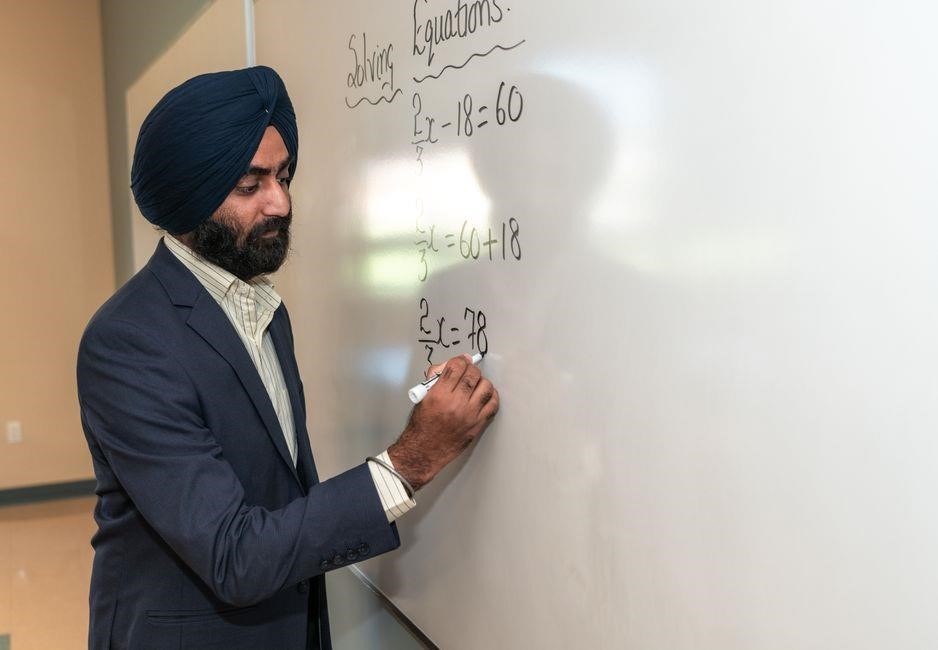
High‑impact instruction cultivates a robust mathematical identity by intertwining authentic problem contexts, reflective dialogue, and purposeful representation. Teachers explicitly model how mathematicians think, speak, and write, inviting students to adopt similar habits. When learners articulate reasoning, justify choices, and connect new ideas to prior knowledge, they internalize the role of a mathematician. Structured peer‑review sessions give students ownership of feedback, reinforcing confidence in their solutions. Digital portfolios allow learners to document growth, celebrating milestones and revisiting earlier drafts to see progress. Scaffolded challenges—starting with concrete manipulatives and advancing to abstract notation—ensure that every student experiences success, thereby strengthening self‑efficacy. Inclusive language and culturally responsive examples broaden participation, letting students see mathematics reflected in their lives. Regular self‑assessment prompts reflection on learning strategies, fostering metacognitive awareness. By celebrating diverse problem‑solving styles, teachers signal that mathematical competence is not a fixed trait but a skill set that can be developed. This iterative process of modeling, practice, reflection, and celebration embeds a positive identity, enabling students to approach future mathematical tasks with curiosity, resilience, and a sense of belonging. Students also engage in reflective journals, where they record insights, question assumptions, and set personal learning goals, reinforcing ownership and growth mindset. Thanks.!