
Embarking on a cosmic journey? Numerous resources, like Kobo’s “Astronomy for Beginners,” offer accessible guides to understanding the universe’s vastness;
These introductory texts illuminate the fundamental concepts of cosmology, planets, and the universe itself, perfect for novices.
Amazon also provides a gateway to astronomy books, catering to those eager to explore the cosmos from a beginner’s perspective.
What is Cosmology?
Cosmology, at its heart, is the study of the universe’s origin, evolution, and ultimate fate. It’s a quest to understand the large-scale structure and dynamics of everything around us, from the smallest particles to the most immense galactic formations.
For beginners, grasping cosmology involves understanding that the universe wasn’t always as it is today. Resources like “Astronomy for Beginners” (available on Kobo) provide foundational knowledge, explaining how scientists piece together the universe’s history.
This field blends astronomy, physics, and philosophy, seeking answers to profound questions: How did the universe begin? What forces govern its behavior? What will become of it? Cosmology isn’t just about observing; it’s about building theoretical models and testing them against observational evidence.
Exploring cosmology requires accepting that much remains unknown, and that our understanding is constantly evolving. It’s a dynamic field, fueled by curiosity and the relentless pursuit of knowledge about our place in the cosmos. Amazon’s selection of astronomy books can further aid this exploration.
The Big Bang Theory: The Beginning
The Big Bang Theory is the prevailing cosmological model for the universe’s earliest known period and its subsequent evolution. It posits that approximately 13.8 billion years ago, the universe was in an extremely hot, dense state that expanded rapidly.
This wasn’t an explosion in space, but rather an expansion of space itself. As the universe expanded and cooled, energy converted into particles – quarks, leptons, and eventually protons and neutrons. These particles then formed hydrogen and helium, the first elements.
Beginner’s guides, such as those found on Kobo, often simplify this complex process, illustrating the timeline from the initial singularity to the formation of the first atoms. Understanding the Big Bang is crucial for grasping the universe’s subsequent development;
While the Big Bang doesn’t explain what caused the initial conditions, it provides a robust framework for understanding the universe’s evolution from its earliest moments. Resources on Amazon can offer deeper dives into the evidence supporting this theory, like cosmic microwave background radiation.
Early Universe: Inflation and Particle Formation
Following the Big Bang, the universe underwent a period of incredibly rapid expansion known as inflation. This exponential growth, occurring fractions of a second after the Big Bang, smoothed out the universe and seeded the structures we observe today.
As the universe cooled further, energy continued to convert into particles. Quarks combined to form hadrons, including protons and neutrons. Electrons and other leptons also emerged. These particles weren’t yet stable atoms, existing in a hot, dense plasma.
Beginner astronomy resources highlight this era as a critical phase in universe construction. The precise conditions allowed for the formation of light elements – primarily hydrogen and helium – through a process called Big Bang nucleosynthesis.
Understanding particle formation requires grasping fundamental physics, but introductory guides on platforms like Kobo and Amazon break down these concepts. This early period laid the groundwork for all subsequent cosmic structures, from stars to galaxies.

Fundamental Forces of the Universe
Four forces govern cosmic interactions: gravity, electromagnetism, the strong nuclear force, and the weak nuclear force. These forces shaped the universe’s evolution and structure.
Gravity: The Architect of Structure
Gravity is the most familiar, yet profoundly influential, force in the universe. It’s the attractive force between objects with mass, dictating the orbits of planets around stars and the clustering of galaxies into larger structures.
Initially, understanding gravity was limited to Earth-based observations – apples falling from trees, as famously pondered by Isaac Newton. Newton’s Law of Universal Gravitation described this force mathematically, stating that the gravitational attraction between two objects is proportional to the product of their masses and inversely proportional to the square of the distance between them.
However, Einstein’s theory of General Relativity revolutionized our understanding. It describes gravity not as a force, but as a curvature of spacetime caused by mass and energy. Imagine a bowling ball placed on a stretched rubber sheet; it creates a dip, and objects rolling nearby will curve towards it. This is analogous to how massive objects warp spacetime, influencing the paths of other objects – including light!
Without gravity, the universe would be a diffuse, homogenous soup of particles. It’s gravity that pulled matter together, forming stars, galaxies, and the intricate cosmic web we observe today. It truly is the architect of the large-scale structure of the universe.
Electromagnetism: Light and Matter Interaction
Electromagnetism governs the interaction between electrically charged particles. This force is responsible for a vast range of phenomena, from the light that allows us to see, to the chemical bonds that hold atoms and molecules together.
It manifests in two primary forms: electric force, acting between stationary charges, and magnetic force, arising from moving charges. These are fundamentally linked, as a changing electric field creates a magnetic field, and vice versa – hence the term ‘electromagnetism.’
Light itself is a form of electromagnetic radiation, traveling as waves of oscillating electric and magnetic fields. Different wavelengths of light correspond to different energies and are perceived as different colors. This interaction with matter is crucial; atoms absorb and emit light at specific wavelengths, creating the spectral fingerprints that allow astronomers to determine their composition.

Electromagnetism also dictates how atoms interact to form molecules, the building blocks of everything we see. Without it, matter as we know it simply wouldn’t exist, and the universe would be a drastically different place.
Strong Nuclear Force: Binding Atomic Nuclei
The strong nuclear force is the most powerful of the four fundamental forces, but it operates over extremely short distances. Its primary role is to overcome the electrostatic repulsion between positively charged protons within the atomic nucleus, binding them together along with neutrons.
Without this force, atomic nuclei would instantly fly apart, and atoms – and therefore all matter – wouldn’t exist. It’s mediated by particles called gluons, which “glue” quarks together to form protons and neutrons. These quarks are fundamental particles, and the strong force confines them within these composite particles.
The residual strong force, a byproduct of the interaction between quarks, also holds the nucleus together. This force diminishes rapidly with distance, explaining why only relatively small nuclei are stable. Larger nuclei require a greater proportion of neutrons to maintain stability, balancing the repulsive forces.
Ultimately, the strong nuclear force is essential for the creation of heavier elements within stars, a process known as nucleosynthesis, shaping the universe’s composition.
Weak Nuclear Force: Radioactive Decay
The weak nuclear force is responsible for radioactive decay, a process where unstable atomic nuclei spontaneously transform into more stable configurations. Unlike the strong force, it acts over even shorter distances and is much weaker, as its name suggests.
This force allows for the transformation of one type of quark into another, leading to changes in the composition of protons and neutrons. A common example is beta decay, where a neutron decays into a proton, an electron, and an antineutrino. This process is crucial for the creation of elements heavier than hydrogen and helium within stars.
The weak force is mediated by particles called W and Z bosons. These bosons are massive, contributing to the short range of the force. It’s also unique in being the only fundamental force that violates parity, meaning it doesn’t behave the same way under spatial inversion.
While less prominent than gravity or electromagnetism in everyday life, the weak force plays a vital role in stellar processes and the evolution of the universe.

Building Blocks of the Universe
The universe comprises dark matter, dark energy, and baryonic matter. These components, though vastly different, interact to form the cosmic structures we observe today.

Understanding these building blocks is key to unraveling the universe’s mysteries.
Dark Matter: The Invisible Mass
What is dark matter? It’s one of the universe’s greatest enigmas, comprising roughly 85% of its total mass, yet it doesn’t interact with light, rendering it invisible to our telescopes. We infer its existence through its gravitational effects on visible matter, like galaxies.
How does it work? Galaxies rotate faster than they should based on the visible matter alone. This suggests an unseen mass – dark matter – provides the extra gravitational pull. It acts as a cosmic scaffolding, influencing the formation and structure of galaxies and galaxy clusters.
What could it be? Scientists are exploring various candidates, including Weakly Interacting Massive Particles (WIMPs) and axions. Detecting dark matter directly remains a significant challenge, driving ongoing research and experiments worldwide. Its presence is crucial for understanding the universe’s evolution and ultimate fate.
Why is it important? Without dark matter, galaxies wouldn’t have formed as we observe them, and the universe would look drastically different. It’s a fundamental component of the cosmic web, shaping the large-scale structure of the universe.
Dark Energy: The Accelerating Expansion
What is dark energy? This mysterious force constitutes approximately 68% of the universe’s total energy density and is responsible for its accelerating expansion. Unlike gravity, which pulls things together, dark energy pushes them apart.
How was it discovered? Observations of distant supernovae in the late 1990s revealed that the universe’s expansion wasn’t slowing down as expected, but was actually speeding up. This unexpected discovery led to the concept of dark energy.
What could it be? The leading theory suggests dark energy is a cosmological constant, an inherent property of space itself. Other possibilities include quintessence, a dynamic energy field, or modifications to our understanding of gravity.
Why is it important? Dark energy’s dominance dictates the universe’s long-term fate. If the expansion continues to accelerate, it could lead to a “Big Rip,” where everything is torn apart. Understanding dark energy is crucial for predicting the universe’s ultimate destiny.
Baryonic Matter: Atoms and Everything We See
What is baryonic matter? This refers to the “ordinary” matter that makes up everything we can see and interact with – stars, planets, galaxies, and even ourselves! It’s composed of protons, neutrons, and electrons, collectively known as baryons.
How much is there? Despite being what we’re most familiar with, baryonic matter only accounts for about 5% of the universe’s total mass-energy content; The rest is dark matter and dark energy.

How did it form? In the early universe, after the Big Bang, conditions were too hot for atoms to exist. As the universe cooled, protons and neutrons formed, eventually combining to create the first atoms – primarily hydrogen and helium.
What does it do? Baryonic matter is the building block of all structures in the universe. Gravity caused it to clump together, forming stars and galaxies. Nuclear fusion within stars creates heavier elements, enriching the universe with the ingredients for planets and life.

From Atoms to Stars
The journey begins! Hydrogen and helium, born from the early universe, coalesced under gravity. This process ignited nuclear fusion, birthing the first stars and initiating stellar evolution;
Star Formation: Nebulae and Protostars
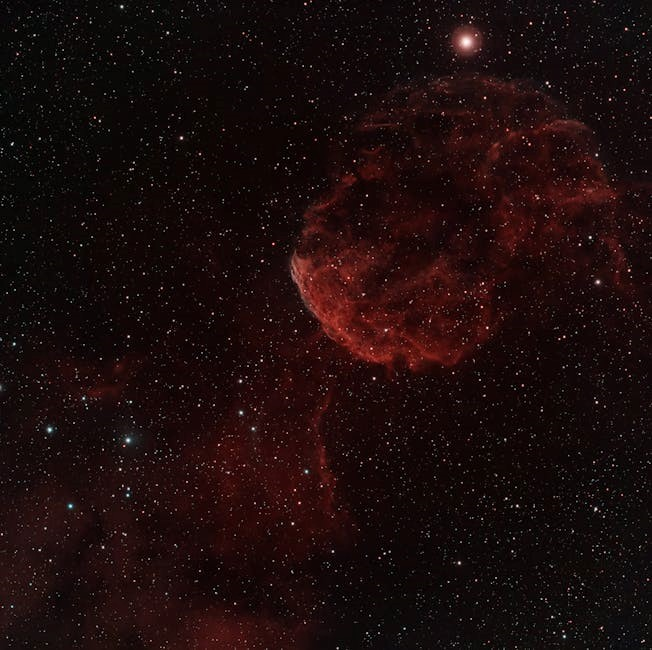
Witnessing stellar birth is a breathtaking spectacle! It all begins within vast, interstellar clouds of gas and dust known as nebulae. These cosmic nurseries, often illuminated by nearby stars, are the birthplaces of new stellar systems. Gravity plays the pivotal role, causing denser regions within the nebula to collapse.
As these regions contract, they heat up and form a protostar – a pre-stellar object still gathering mass from its surroundings. This phase isn’t a quick process; it can take millions of years for a protostar to accumulate enough material. The surrounding disk of gas and dust, known as a protoplanetary disk, is where planets eventually form.
The protostar continues to grow, increasing in temperature and density. Eventually, the core becomes hot enough to initiate nuclear fusion – the process where hydrogen atoms fuse to form helium, releasing tremendous energy. This ignition marks the birth of a true star, shining brightly and embarking on its long life cycle. The remnants of the nebula are often dispersed by the star’s radiation and stellar winds, leaving behind a newly formed star and potentially a planetary system.
Stellar Evolution: Life Cycle of Stars
Stars aren’t eternal; they evolve! A star’s life cycle is dictated by its initial mass. Smaller stars, like our Sun, spend billions of years fusing hydrogen into helium in their cores, existing in a stable phase called the main sequence. Eventually, they exhaust their hydrogen fuel.
As hydrogen runs out, the core contracts, and the star expands into a red giant. Later, it sheds its outer layers, forming a beautiful planetary nebula, leaving behind a dense, hot core called a white dwarf. This white dwarf slowly cools and fades over trillions of years.
Massive stars, however, have a more dramatic fate. They burn through their fuel much faster, evolving into red supergiants. When they exhaust their fuel, they undergo a catastrophic supernova explosion, briefly outshining entire galaxies. The remnant can become either a neutron star or, if massive enough, a black hole – regions of spacetime with gravity so strong that nothing, not even light, can escape.
Supernovae: Stellar Explosions and Element Creation
Supernovae are spectacular stellar deaths! These incredibly energetic explosions mark the end of life for massive stars, briefly becoming brighter than entire galaxies. But they aren’t just destructive events; they are crucial for the universe’s chemical evolution.
During a supernova, immense heat and pressure forge elements heavier than iron – like gold, silver, and uranium – through a process called nucleosynthesis. These newly created elements are then scattered into space, enriching the interstellar medium.
This ejected material becomes the building blocks for future stars, planets, and even life! Essentially, we are all made of stardust – the remnants of ancient supernovae. Different types of supernovae exist, depending on the star’s mass and how the explosion occurs.
Studying supernovae helps astronomers understand stellar evolution, the expansion of the universe, and the origin of the elements that make up everything around us.
Galaxies and Large-Scale Structure
Galaxies, vast islands of stars, are the fundamental building blocks of the universe. They cluster together, forming groups, clusters, and superclusters, connected by a cosmic web.
Galaxy Types: Spiral, Elliptical, and Irregular
Galaxies aren’t all created equal! Astronomers categorize them based on their visual appearance, primarily into three main types: spiral, elliptical, and irregular. Spiral galaxies, like our Milky Way, boast a central bulge surrounded by a flattened, rotating disk with prominent spiral arms. These arms are sites of active star formation, glowing with young, blue stars and interstellar gas and dust.
Elliptical galaxies, in contrast, are characterized by their smooth, oval shapes. They generally contain older stars, with little ongoing star formation, and possess less gas and dust than spirals. They range in size from dwarf ellipticals to giant ellipticals, some of the most massive galaxies known.
Finally, irregular galaxies defy easy classification. They lack a defined shape and often result from galactic collisions or interactions. These galaxies are often rich in gas and dust and exhibit vigorous star formation. Understanding these classifications helps astronomers trace the evolutionary history of galaxies and the universe itself.
Galaxy Clusters and Superclusters
Galaxies rarely exist in isolation. They are gravitationally bound together into groups and clusters. Galaxy groups typically contain a few dozen galaxies, while galaxy clusters can house hundreds or even thousands. These clusters are dominated by dark matter, an invisible substance that provides the extra gravity needed to hold them together.
Clusters themselves aren’t randomly distributed; they form even larger structures called superclusters. Superclusters are vast collections of galaxy clusters, stretching hundreds of millions of light-years across the universe. They represent the largest known structures in the cosmos.
Between these superclusters lie enormous voids – regions of space with very few galaxies. This arrangement creates a cosmic web, a network of filaments and voids that resembles a sponge. Studying these large-scale structures provides insights into the universe’s formation and evolution, revealing how matter has clumped together over billions of years.
The Cosmic Web: Distribution of Galaxies
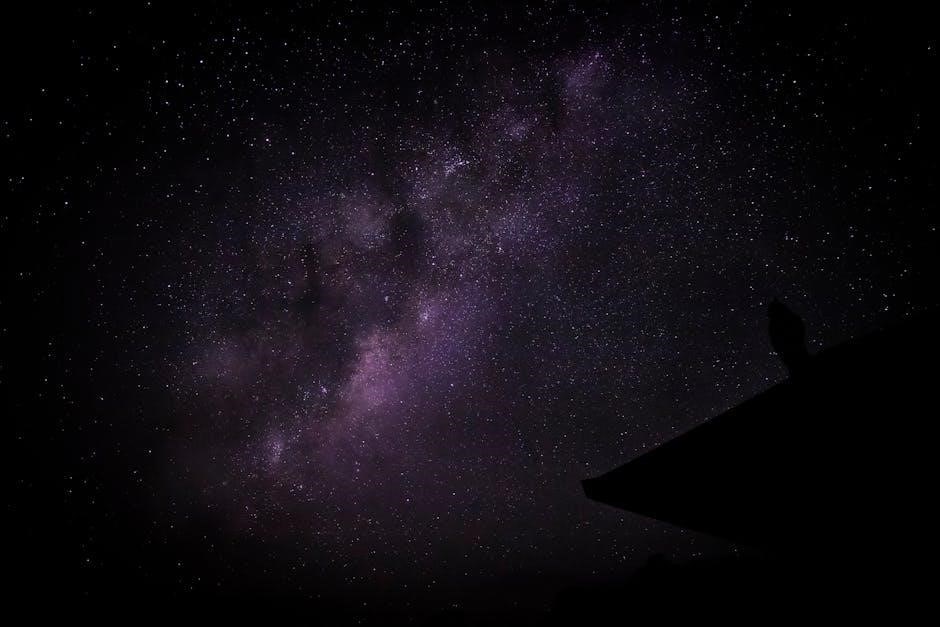
Looking at the universe on a grand scale reveals a fascinating structure: the cosmic web. This isn’t a random scattering of galaxies, but a vast network of filaments, sheets, and voids. Galaxies aren’t uniformly spread throughout space; instead, they are concentrated along these filaments, which are like cosmic highways.
These filaments intersect at points of high density, forming galaxy clusters and superclusters – the largest gravitationally bound structures in the universe. Between the filaments lie enormous, relatively empty regions called voids. These voids can span hundreds of millions of light-years.
The cosmic web arose from tiny density fluctuations in the early universe, amplified by gravity over billions of years. Dark matter plays a crucial role in its formation, providing the gravitational scaffolding upon which galaxies and structures assemble. Mapping the cosmic web helps us understand the universe’s evolution and the distribution of matter within it.
The Future of the Universe
The universe’s fate remains uncertain. Possible scenarios include the “Big Rip,” “Big Crunch,” or “Big Freeze,” all dictated by expansion rates and dark energy’s influence.
Possible Scenarios: Big Rip, Big Crunch, Big Freeze
Contemplating the ultimate destiny of the cosmos leads to several fascinating, yet speculative, scenarios; The “Big Rip” posits an ever-accelerating expansion driven by dark energy, eventually overcoming all forces, tearing apart galaxies, stars, planets, and even atoms. This is a dramatic, albeit less favored, possibility.

Conversely, the “Big Crunch” suggests that expansion will eventually halt and reverse, causing the universe to collapse in on itself, potentially into a singularity – a mirror image of the Big Bang. This scenario requires sufficient mass and gravity to overcome dark energy’s repulsive force.
Finally, the “Big Freeze” (or Heat Death) is currently the most widely accepted fate. It envisions continued expansion, leading to a universe that becomes increasingly cold and dilute. Star formation will cease, black holes will evaporate, and eventually, all energy will be evenly distributed, resulting in a state of maximum entropy and minimal activity. These futures depend heavily on the nature of dark energy and the universe’s overall density.
Expansion Rate and its Implications
The universe isn’t static; it’s expanding, and the rate of this expansion is a crucial cosmological parameter. Currently measured around 70 kilometers per second per megaparsec (km/s/Mpc), meaning galaxies are receding from us at that speed for every megaparsec of distance, this rate isn’t constant.
Determining the expansion rate, often called the Hubble Constant, is surprisingly complex, with different measurement techniques yielding slightly different results – a discrepancy known as the Hubble Tension. This tension suggests our understanding of the universe may be incomplete.
The expansion rate dictates the universe’s future. A higher rate favors the “Big Rip,” while a lower rate increases the likelihood of a “Big Crunch.” The accelerating expansion, driven by dark energy, implies the universe will continue to expand indefinitely, leading to the “Big Freeze.” Understanding this rate is fundamental to unraveling the universe’s origin, evolution, and ultimate fate.